
What Are the Key Features of High-Quality Commercial Brewery Equipment?
Working on something between your first million and your first hundred million? We embed at the founder level.
Start a Project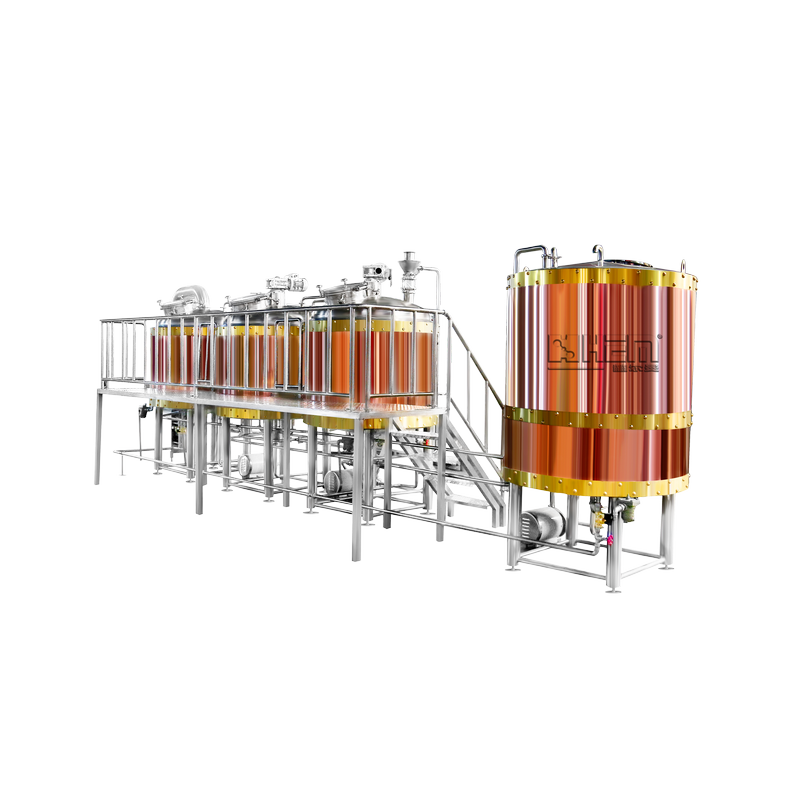
Premium commercial brewery equipment demands 316L stainless steel with a surface roughness below 0.4 μm Ra to prevent microbial colonization. Systems must utilize steam-jacketed vessels with a minimum heat transfer coefficient of 1,200 W/m²K, integrated with PLC-based controls managing oxygen ingress at under 10 ppb. Professional installations prioritize modular piping geometries that eliminate dead legs, ensuring 99.9% sanitary efficiency during automated CIP cycles. High-capacity setups often deploy heat recovery units that capture 65% of spent thermal energy, reducing utility expenditures by approximately 18% annually across standardized industrial production environments.
High-end commercial brewery equipment starts with the molecular composition of the metal, where 316L stainless steel provides a molybdenum content of 2-3%, significantly outperforming the 304 grade in chloride-rich environments. Surface finish specifications dictate the ease of cleaning, as research shows that increasing internal roughness from 0.4 μm to 1.2 μm requires 40% more caustic chemical volume to achieve equivalent microbial reduction.
Precision welding standards, such as those meeting ASME BPE criteria, ensure that internal joints remain free of oxidation or crevice corrosion, which are primary sites for wild yeast or bacterial inoculation in systems processing 5,000-liter batches or larger.
Welded seams subjected to radiographic testing show a 95% reduction in internal structural anomalies compared to standard manual TIG welds, providing longevity for tanks intended to endure 20-year operational lifecycles.
Advanced thermal management relies on dimple-jacketed configurations that maintain uniform temperature distribution across the vessel wall, minimizing the delta between wort contact points to less than 2°C. Integrating these steam-side controls reduces the risk of localized caramelization, which can alter the color profile of light-colored ales by more than 2 SRM units during a 90-minute boil.
Efficient heat exchange technology transfers thermal energy from boiling wort back into incoming cold brewing liquor, potentially saving 15-20 kWh per hectoliter, a measurable gain in energy productivity for facilities producing over 5,000 hectoliters per year.
Flow dynamics within the piping architecture dictate the performance of the entire brewhouse, necessitating the use of Tri-Clamp sanitary fittings to maintain a seal integrity capable of withstanding 3 bar of working pressure without leakage. Eliminating dead legs—defined as pipe segments longer than 1.5 times the internal diameter—prevents stagnant liquid zones where biological activity often spikes by 300% during fermentation cycles.
| Feature Type | High-Performance Metric | Operational Benefit |
| Surface Ra | < 0.4 μm | Lower cleaning cost |
| Thermal Load | 1,200 W/m²K | Faster ramp rates |
| PLC Logic | < 0.5% drift | Batch repeatability |
| Pipe Geometry | Zero dead legs | Microbial control |
Automated control systems replace manual valve manipulation with pneumatic actuators that exhibit response times under 200 milliseconds, ensuring precise gravity adjustments during the lautering stage. Data acquisition modules installed on modern units record dissolved oxygen levels, flow rates, and pressure at 10-second intervals, creating a digital record that confirms 98% of batches fall within the designated sensory tolerance range.
Remote monitoring capabilities allow operators to adjust fermentation temperatures by 0.1°C increments, maintaining a steady profile that minimizes ester development and ensures consistency for commercial brands that prioritize batch uniformity across multiple distribution markets.
Ergonomics impact the daily throughput of the cellar crew, as modular catwalks and centrally located control panels reduce travel time between vessel operations by 25% during a standard 8-hour shift. Configuring valves for ground-level access minimizes the use of ladders, which correlates with a 15% decrease in workplace safety incidents while increasing the physical speed at which a brewer can complete a transfer or a cleaning cycle.
| Component | Standard Tolerance | Premium Specification |
| Temperature Probe | ± 0.5°C | ± 0.1°C |
| Flow Meter | ± 2% | ± 0.5% |
| CIP Pressure | 1.5 bar | 2.5 bar |
| Weld Inspection | Visual | Radiographic/X-ray |
Scalability allows a brewery to add a 40-hectoliter unitank to a system originally designed for 20-hectoliter capacity, provided the initial manifold design includes 25% excess flow volume capacity for future expansions. Maintaining this overhead prevents the need to replace primary pumping hardware, keeping capital reinvestment costs 40% lower when the facility decides to increase annual output volume from 2,000 to 3,500 hectoliters.