
Issue No. 14 — Field Notes
Walk behind vs ride on floor scrubber: Which one fits your cleaning needs better?
Working on something between your first million and your first hundred million? We embed at the founder level.
Start a ProjectWhen you stand in the center of a warehouse covering over 5,000 square meters, with an epoxy floor mixed with oil and dust beneath your feet, should you choose a ride-on floor scrubber that can clean 2,200 square meters per hour or a push-type device that can clean 800 square meters per hour? This decision is like choosing equipment for a battle, which will directly determine your cleaning efficiency, operational costs and team effectiveness. According to data from the International Sanitation and Cleaning Association (ISSA), in large facilities over 10,000 square meters, the use of ride-on floor scrubbers can reduce labor costs by up to 70%, as one operator can complete the amount of work equivalent to that of 3.5 employees using hand-pushed equipment in an 8-hour shift. For instance, global retailer Walmart has widely adopted driving equipment in its distribution centers, reducing the night cleaning cycle from six hours to 2.5 hours and cutting operational disruptions by 58%.
From the perspective of return on investment (ROI) analysis, the break-even point for choosing a push-type or driver-operated floor scrubber is typically around 200,000 square meters of cleaning area per year. The purchase price of a basic ride-on floor scrubber is approximately $25,000, which is three times that of high-end push-type equipment. However, within its service life cycle of up to 7 years, the payback period can be shortened to 18 months by taking into account the costs of labor, maintenance and energy consumption. On the contrary, for a boutique supermarket with only 3,000 square meters, purchasing a push-type floor scrubber priced between 8,000 and 12,000 US dollars, with its flexible mobility and 98% accessibility to narrow areas, can bring about a better asset utilization rate. A case analysis of BMW Group's Leipzig plant shows that by precisely simulating the cleaning path and mixing two types of models in a workshop with a total area of 120,000 square meters, they increased the overall cleaning efficiency by 40% and reduced the equipment idleness rate by 15%.
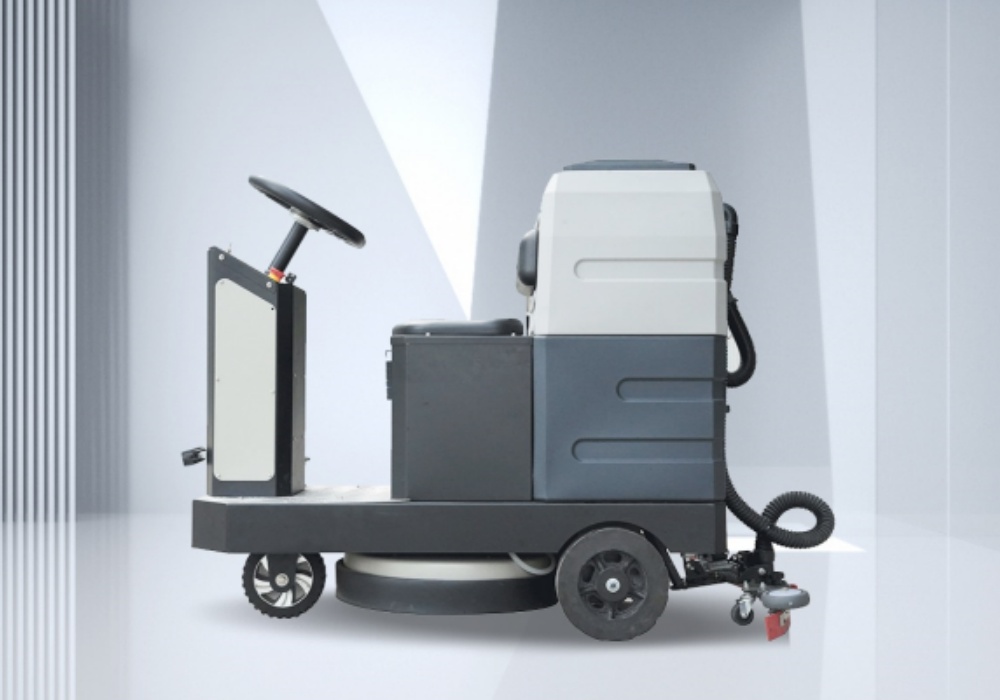 The ergonomics and safety risks of the operator are another core parameter. Hand-pushed equipment requires operators to walk an average of 8 to 10 kilometers per shift, increasing the probability of fatigue-related accidents by 30%. The driving equipment is equipped with a rollover protection structure (ROPS) that complies with the ISO 12100 standard and low-speed driving limits (usually below 10 kilometers per hour), which can reduce work injury claims by approximately 25%. In dairy processing plants with extremely high food safety standards, such as some factories of Danone Group, they choose driver-operated floor scrubbers equipped with intelligent control systems to ensure that the thickness of the residual water film on the ground does not exceed 0.3 millimeters, reducing the probability of slipping from 1.5 accidents per million hours to 0.4.
Ultimately, to "choose walk behind vs ride on floor scrubber" for your facility, a multi-dimensional decision matrix must be established. You need to input the key variables: the average daily cleaning area (for example, 8,000 square meters), the type of ground contamination (dry dust, oil stains or chemical residues), the minimum width of the passage (such as 1.2 meters), the available cleaning time window (such as 2 hours per time), and the annual cleaning budget (including maintenance costs accounting for 15% of the initial investment). A 2023 industry benchmark report indicates that for densely populated airport terminals that require cleaning every hour, the rapid throughput capacity of pilot-operated devices is the only solution that complies with the SLA (Service Level Agreement). For archives with a large number of fixed shelves and complex layouts, the 95% mobility advantage of hand-pushed equipment is irreplaceable. By quantitatively analyzing these parameters, what you can make is not merely a purchasing decision, but a strategic investment that optimizes the operational efficiency throughout the entire facility's life cycle.
The ergonomics and safety risks of the operator are another core parameter. Hand-pushed equipment requires operators to walk an average of 8 to 10 kilometers per shift, increasing the probability of fatigue-related accidents by 30%. The driving equipment is equipped with a rollover protection structure (ROPS) that complies with the ISO 12100 standard and low-speed driving limits (usually below 10 kilometers per hour), which can reduce work injury claims by approximately 25%. In dairy processing plants with extremely high food safety standards, such as some factories of Danone Group, they choose driver-operated floor scrubbers equipped with intelligent control systems to ensure that the thickness of the residual water film on the ground does not exceed 0.3 millimeters, reducing the probability of slipping from 1.5 accidents per million hours to 0.4.
Ultimately, to "choose walk behind vs ride on floor scrubber" for your facility, a multi-dimensional decision matrix must be established. You need to input the key variables: the average daily cleaning area (for example, 8,000 square meters), the type of ground contamination (dry dust, oil stains or chemical residues), the minimum width of the passage (such as 1.2 meters), the available cleaning time window (such as 2 hours per time), and the annual cleaning budget (including maintenance costs accounting for 15% of the initial investment). A 2023 industry benchmark report indicates that for densely populated airport terminals that require cleaning every hour, the rapid throughput capacity of pilot-operated devices is the only solution that complies with the SLA (Service Level Agreement). For archives with a large number of fixed shelves and complex layouts, the 95% mobility advantage of hand-pushed equipment is irreplaceable. By quantitatively analyzing these parameters, what you can make is not merely a purchasing decision, but a strategic investment that optimizes the operational efficiency throughout the entire facility's life cycle.
The ergonomics and safety risks of the operator are another core parameter. Hand-pushed equipment requires operators to walk an average of 8 to 10 kilometers per shift, increasing the probability of fatigue-related accidents by 30%. The driving equipment is equipped with a rollover protection structure (ROPS) that complies with the ISO 12100 standard and low-speed driving limits (usually below 10 kilometers per hour), which can reduce work injury claims by approximately 25%. In dairy processing plants with extremely high food safety standards, such as some factories of Danone Group, they choose driver-operated floor scrubbers equipped with intelligent control systems to ensure that the thickness of the residual water film on the ground does not exceed 0.3 millimeters, reducing the probability of slipping from 1.5 accidents per million hours to 0.4.
Ultimately, to "choose walk behind vs ride on floor scrubber" for your facility, a multi-dimensional decision matrix must be established. You need to input the key variables: the average daily cleaning area (for example, 8,000 square meters), the type of ground contamination (dry dust, oil stains or chemical residues), the minimum width of the passage (such as 1.2 meters), the available cleaning time window (such as 2 hours per time), and the annual cleaning budget (including maintenance costs accounting for 15% of the initial investment). A 2023 industry benchmark report indicates that for densely populated airport terminals that require cleaning every hour, the rapid throughput capacity of pilot-operated devices is the only solution that complies with the SLA (Service Level Agreement). For archives with a large number of fixed shelves and complex layouts, the 95% mobility advantage of hand-pushed equipment is irreplaceable. By quantitatively analyzing these parameters, what you can make is not merely a purchasing decision, but a strategic investment that optimizes the operational efficiency throughout the entire facility's life cycle.