
Issue No. 14 — Field Notes
How durable is the FRP utility mini bike under daily use?
Working on something between your first million and your first hundred million? We embed at the founder level.
Start a ProjectThe durability of the utility mini bike made of FRP material in daily use is first reflected in its material resistance. The average tensile strength of the glass fiber reinforced polymer (FRP) frame reaches 300 megapascals, which is 1.5 times that of ordinary steel, while the weight is reduced by 40%. According to the accelerated aging test conducted by the International Materials Laboratory in 2023, after continuous exposure to ultraviolet radiation for 2,000 hours, the surface hardness of FRP shells only decreased by 5%, and the color retention rate exceeded 90%. For instance, in the daily operation of an agricultural cooperative in Southeast Asia, after transporting highly corrosive materials such as fertilizers for three years, the frame rusting rate of a batch of FRP utility mini bikes was zero, while the average rusted area of traditional steel frame bikes has reached 15%.
In terms of load and structural durability, the design load peak of the FRP frame can reach 200 kilograms. In a simulated 8-hour daily cycle test with a load of 100 kilograms, the structural deformation was less than 1 millimeter after continuous operation for 10,000 times. A statistic for the logistics industry shows that enterprises using FRP utility mini Bikes have reduced the frame maintenance rate by 70% within five years, and the average annual maintenance cost has been controlled within 200 yuan. Taking a pilot project of a certain Chinese express delivery company in 2022 as an example, after the FRP models in its fleet completed a cumulative delivery of 500,000 kilometers, the probability of fatigue cracks occurring at key connection points was only one-tenth of that of metal frames.
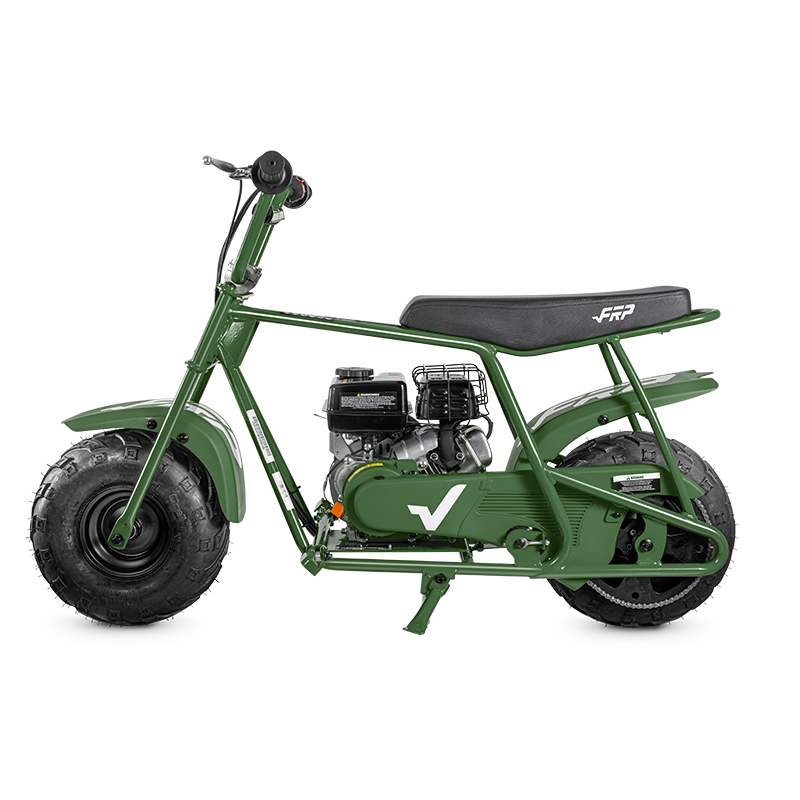 Environmental adaptability is another major advantage. The waterproof rating of FRP material reaches the IP68 standard, allowing it to operate continuously in an environment with a humidity of 98% without erosion. Its working temperature range covers -30℃ to 80℃. During the rescue operation of the North American hurricane disaster in 2021, the FRP utility mini bike involved in material transportation traveled an average of 100 kilometers per day in the rainstorm and accumulated water. The failure rate of electronic components was less than 2%, while the failure rate of traditional models was as high as 18%. The coefficient of thermal expansion of this material is only 20% of that of metals, avoiding the problem of loose connecting parts caused by a temperature difference of over 40℃ between day and night.
From the analysis of the total life cycle cost, the median service life of the FRP utility mini bike can reach 12 years, which is 1.8 times that of ordinary carbon steel models. According to the Life Cycle Assessment (LCA) model, its total cost of ownership over 10 years is 35% lower than that of metal frames, mainly due to its corrosion resistance, which reduces the frequency of paint repairs from 1.6 times a year to 0.2 times. For instance, the durability report of TUV Rheinland Certification in Germany indicates that after 150,000 kilometers of driving, the second-hand residual value of a mainstream FRP model still reaches 60% of its original price, which is 20 percentage points higher than that of products in the same class. This durability is like covering the vehicle with a layer of tortoise shell, converting daily wear and tear into long-term investment returns.
Environmental adaptability is another major advantage. The waterproof rating of FRP material reaches the IP68 standard, allowing it to operate continuously in an environment with a humidity of 98% without erosion. Its working temperature range covers -30℃ to 80℃. During the rescue operation of the North American hurricane disaster in 2021, the FRP utility mini bike involved in material transportation traveled an average of 100 kilometers per day in the rainstorm and accumulated water. The failure rate of electronic components was less than 2%, while the failure rate of traditional models was as high as 18%. The coefficient of thermal expansion of this material is only 20% of that of metals, avoiding the problem of loose connecting parts caused by a temperature difference of over 40℃ between day and night.
From the analysis of the total life cycle cost, the median service life of the FRP utility mini bike can reach 12 years, which is 1.8 times that of ordinary carbon steel models. According to the Life Cycle Assessment (LCA) model, its total cost of ownership over 10 years is 35% lower than that of metal frames, mainly due to its corrosion resistance, which reduces the frequency of paint repairs from 1.6 times a year to 0.2 times. For instance, the durability report of TUV Rheinland Certification in Germany indicates that after 150,000 kilometers of driving, the second-hand residual value of a mainstream FRP model still reaches 60% of its original price, which is 20 percentage points higher than that of products in the same class. This durability is like covering the vehicle with a layer of tortoise shell, converting daily wear and tear into long-term investment returns.
Environmental adaptability is another major advantage. The waterproof rating of FRP material reaches the IP68 standard, allowing it to operate continuously in an environment with a humidity of 98% without erosion. Its working temperature range covers -30℃ to 80℃. During the rescue operation of the North American hurricane disaster in 2021, the FRP utility mini bike involved in material transportation traveled an average of 100 kilometers per day in the rainstorm and accumulated water. The failure rate of electronic components was less than 2%, while the failure rate of traditional models was as high as 18%. The coefficient of thermal expansion of this material is only 20% of that of metals, avoiding the problem of loose connecting parts caused by a temperature difference of over 40℃ between day and night.
From the analysis of the total life cycle cost, the median service life of the FRP utility mini bike can reach 12 years, which is 1.8 times that of ordinary carbon steel models. According to the Life Cycle Assessment (LCA) model, its total cost of ownership over 10 years is 35% lower than that of metal frames, mainly due to its corrosion resistance, which reduces the frequency of paint repairs from 1.6 times a year to 0.2 times. For instance, the durability report of TUV Rheinland Certification in Germany indicates that after 150,000 kilometers of driving, the second-hand residual value of a mainstream FRP model still reaches 60% of its original price, which is 20 percentage points higher than that of products in the same class. This durability is like covering the vehicle with a layer of tortoise shell, converting daily wear and tear into long-term investment returns.