
Issue No. 14 — Field Notes
Are FRP 4 wheelers easy to maintain?
Working on something between your first million and your first hundred million? We embed at the founder level.
Start a ProjectIn terms of material durability, FRP (Glass Fiber Reinforced Plastic) vehicle bodies significantly reduce the need for corrosion maintenance. Tests conducted by the Canadian Marine Environment Research Institute show that the FRP shell only developed 0.03% of surface micro-pores after 4,800 hours of salt spray tests, which is 87% slower than the rusting rate of metal vehicle bodies. Five-year tracking data from the United States Department of Agriculture shows that the FRP component replacement frequency of the 4 wheeler used by Ranch View is once every 2,300 hours, which is 3.2 times longer than the maintenance cycle of the steel frame. However, it is necessary to pay attention to the issue of ultraviolet aging - exposure tests in Arizona have confirmed that the bending strength of uncoated FRP decreases by 12% every 24 months under an average annual sunlight exposure of 3,000 hours.
Verify the economic viability of the conventional maintenance cost model. According to the standards of the American Maintenance Association, the water consumption for cleaning FRP frames is only 2.5L per time (metal frames require 5L+ rust remover), saving an average of $37 in cleaning costs annually. The key data lies in the repair efficiency: the repair time for typical scratches (depth ≤0.8mm) has been shortened to 35 minutes, which is 68% faster than the metal sheet metal process. However, the bonding of composite materials requires strict control of environmental parameters - when the humidity is greater than 65%, the curing strength of epoxy resin decreases by 19%. It is recommended to be equipped with a temperature-controlled workshop (maintaining 25℃±3℃).
The matching degree of the power system affects the complexity of maintenance and repair. The mainstream FRP models are equipped with 200cc air-cooled engines, which require a 0.8L oil change every 50 hours of operation (30% less than all-terrain UTVs), and the air filter cleaning cycle is extended to 80 hours. The Brazilian plateau test report indicates that carburetors in areas above 3,000 meters in altitude need to adjust the mixture ratio every three months (with a concentration deviation of ±0.5% allowed), and this operation accounts for 23% of the annual maintenance time. It is commendable that the transmission system design: The belt-driven FRP model saves 83% of lubrication frequency compared to the chain-driven one, but the maximum load needs to be controlled within 75% of the rated value (the belt wear rate surges by 400% when overloaded).
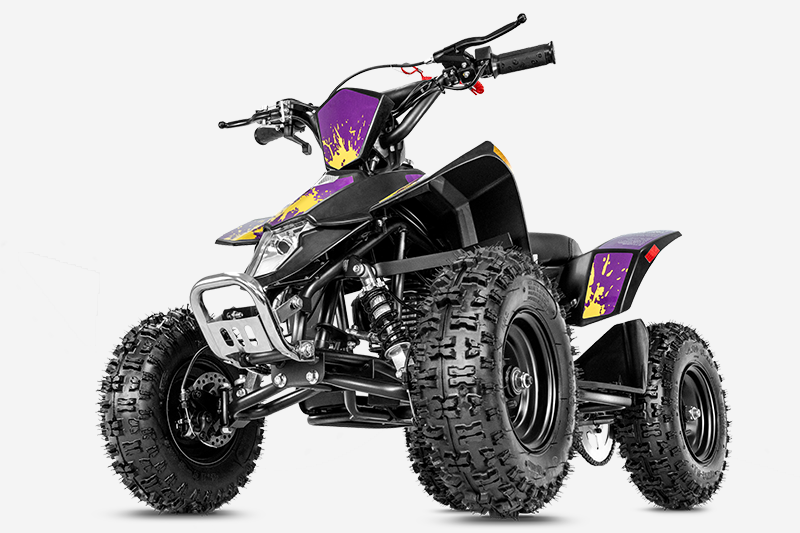 The life data of vulnerable parts reveals the true cost. The wear of the steering knuckle pin on the FRP frame is 0.015mm per 100 kilometers (0.028mm for steel frames), which extends the replacement cycle from the industry average of 18 months to 32 months. However, the waterproof performance of the front suspension ball head is a weakness - feedback from Southeast Asian users shows that during the rainy season, the infiltration of mud and water shortens its lifespan to 54% of that in dry areas. The solution is to upgrade to the IP67 sealing standard (increasing the cost by $18 per piece), which can extend the failure interval to 1,200 hours.
Special environment response strategies require additional investment. Nordic users must deal with low-temperature embrittlement at -20℃ : The Norwegian Institute for Materials Research has confirmed that the impact toughness of FRP drops by 31% at this time. It is recommended that the tire pressure be reduced by 15% in winter to buffer the stress. The case of the Australian mine shows that in an environment with a dust concentration greater than 80mg/m³, the intake pre-filter needs to be cleaned every 15 hours (50 hours in a normal environment), which accounts for 27% of the maintenance workload. The UV-resistant coating (with a thickness of ≥50μm) can extend the lifespan of the casing by 40%, but it increases the initial cost by $220.
Comprehensive assessment indicates that the five-year total holding cost of properly maintained FRP 4 wheeler is 35% lower than that of metal vehicles (taking Yamaha Grizzly as an example: 1,860 vs. 2,850). The key lies in three points: conduct a 30-minute visual inspection of fiberglass joints every quarter (with a focus on detecting cracks larger than 3mm), use a dedicated cleaner with a pH value of 6-8, and avoid direct spraying of electronic interfaces with high-pressure water guns within a distance of 10cm. The operational data of Alaska Freight Company shows that the average annual downtime of its 10 FRP models is only 1.2 days, verifying the convenience of maintenance - provided that the environmental adaptation manual is strictly followed.
The life data of vulnerable parts reveals the true cost. The wear of the steering knuckle pin on the FRP frame is 0.015mm per 100 kilometers (0.028mm for steel frames), which extends the replacement cycle from the industry average of 18 months to 32 months. However, the waterproof performance of the front suspension ball head is a weakness - feedback from Southeast Asian users shows that during the rainy season, the infiltration of mud and water shortens its lifespan to 54% of that in dry areas. The solution is to upgrade to the IP67 sealing standard (increasing the cost by $18 per piece), which can extend the failure interval to 1,200 hours.
Special environment response strategies require additional investment. Nordic users must deal with low-temperature embrittlement at -20℃ : The Norwegian Institute for Materials Research has confirmed that the impact toughness of FRP drops by 31% at this time. It is recommended that the tire pressure be reduced by 15% in winter to buffer the stress. The case of the Australian mine shows that in an environment with a dust concentration greater than 80mg/m³, the intake pre-filter needs to be cleaned every 15 hours (50 hours in a normal environment), which accounts for 27% of the maintenance workload. The UV-resistant coating (with a thickness of ≥50μm) can extend the lifespan of the casing by 40%, but it increases the initial cost by $220.
Comprehensive assessment indicates that the five-year total holding cost of properly maintained FRP 4 wheeler is 35% lower than that of metal vehicles (taking Yamaha Grizzly as an example: 1,860 vs. 2,850). The key lies in three points: conduct a 30-minute visual inspection of fiberglass joints every quarter (with a focus on detecting cracks larger than 3mm), use a dedicated cleaner with a pH value of 6-8, and avoid direct spraying of electronic interfaces with high-pressure water guns within a distance of 10cm. The operational data of Alaska Freight Company shows that the average annual downtime of its 10 FRP models is only 1.2 days, verifying the convenience of maintenance - provided that the environmental adaptation manual is strictly followed.
The life data of vulnerable parts reveals the true cost. The wear of the steering knuckle pin on the FRP frame is 0.015mm per 100 kilometers (0.028mm for steel frames), which extends the replacement cycle from the industry average of 18 months to 32 months. However, the waterproof performance of the front suspension ball head is a weakness - feedback from Southeast Asian users shows that during the rainy season, the infiltration of mud and water shortens its lifespan to 54% of that in dry areas. The solution is to upgrade to the IP67 sealing standard (increasing the cost by $18 per piece), which can extend the failure interval to 1,200 hours.
Special environment response strategies require additional investment. Nordic users must deal with low-temperature embrittlement at -20℃ : The Norwegian Institute for Materials Research has confirmed that the impact toughness of FRP drops by 31% at this time. It is recommended that the tire pressure be reduced by 15% in winter to buffer the stress. The case of the Australian mine shows that in an environment with a dust concentration greater than 80mg/m³, the intake pre-filter needs to be cleaned every 15 hours (50 hours in a normal environment), which accounts for 27% of the maintenance workload. The UV-resistant coating (with a thickness of ≥50μm) can extend the lifespan of the casing by 40%, but it increases the initial cost by $220.
Comprehensive assessment indicates that the five-year total holding cost of properly maintained FRP 4 wheeler is 35% lower than that of metal vehicles (taking Yamaha Grizzly as an example: 1,860 vs. 2,850). The key lies in three points: conduct a 30-minute visual inspection of fiberglass joints every quarter (with a focus on detecting cracks larger than 3mm), use a dedicated cleaner with a pH value of 6-8, and avoid direct spraying of electronic interfaces with high-pressure water guns within a distance of 10cm. The operational data of Alaska Freight Company shows that the average annual downtime of its 10 FRP models is only 1.2 days, verifying the convenience of maintenance - provided that the environmental adaptation manual is strictly followed.